.webp) h5gameplanet.com
h5gameplanet.comLearning to Read the Wild: How RuneScape: Dragonwilds Turns Survival Into Literacy

The first time a dragon crosses the sky above your half-built shelter in Dragonwilds, the instinct is pure animal panic. You drop what you're carrying, you scan for cover, you brace for the kind of instant, unfair death that survival games have trained an entire generation of players to expect from anything that flies, roars, or casts a shadow larger than a house. And then, more often than not, nothing happens. The dragon continues on its path, indifferent to you, following whatever internal logic governs where it goes and why, and you are left standing in a clearing with your heart still racing over a threat that was never actually aimed at you. That moment, the gap between the fear a dragon is supposed to represent and the actual behavior it displays, is the single most important thing to understand about what this game is trying to do. Dragonwilds is not interested in dragons as jump-scares. It is interested in dragons as something closer to weather: a force with patterns, moods, and consequences that a patient, attentive player can eventually learn to read. The entire survival loop, the building, the crafting, the taming, the slow accumulation of a home carved out of hostile land, is ultimately in service of one long, unglamorous process: turning a world that starts out illegible into one you can finally understand.
This distinction matters more than it might initially seem, because it points to a problem that has quietly plagued the survival genre for years. Most survival games treat danger as a resource to be managed rather than a language to be learned. A wolf pack appears, you fight or flee. A storm rolls in, you take shelter or take damage. The world generates threats, the player responds to threats, and the relationship between the two rarely deepens beyond that basic call-and-response. Dragonwilds, whether by design ambition or by necessity given the scale of the creatures it centers the experience around, cannot get away with that shallow relationship. A dragon is too large, too consequential, and too central to the game's identity to function as just another spawn table entry. It has to mean something structurally, not just decoratively, and the game's best moments are the ones where that structural weight becomes obvious.
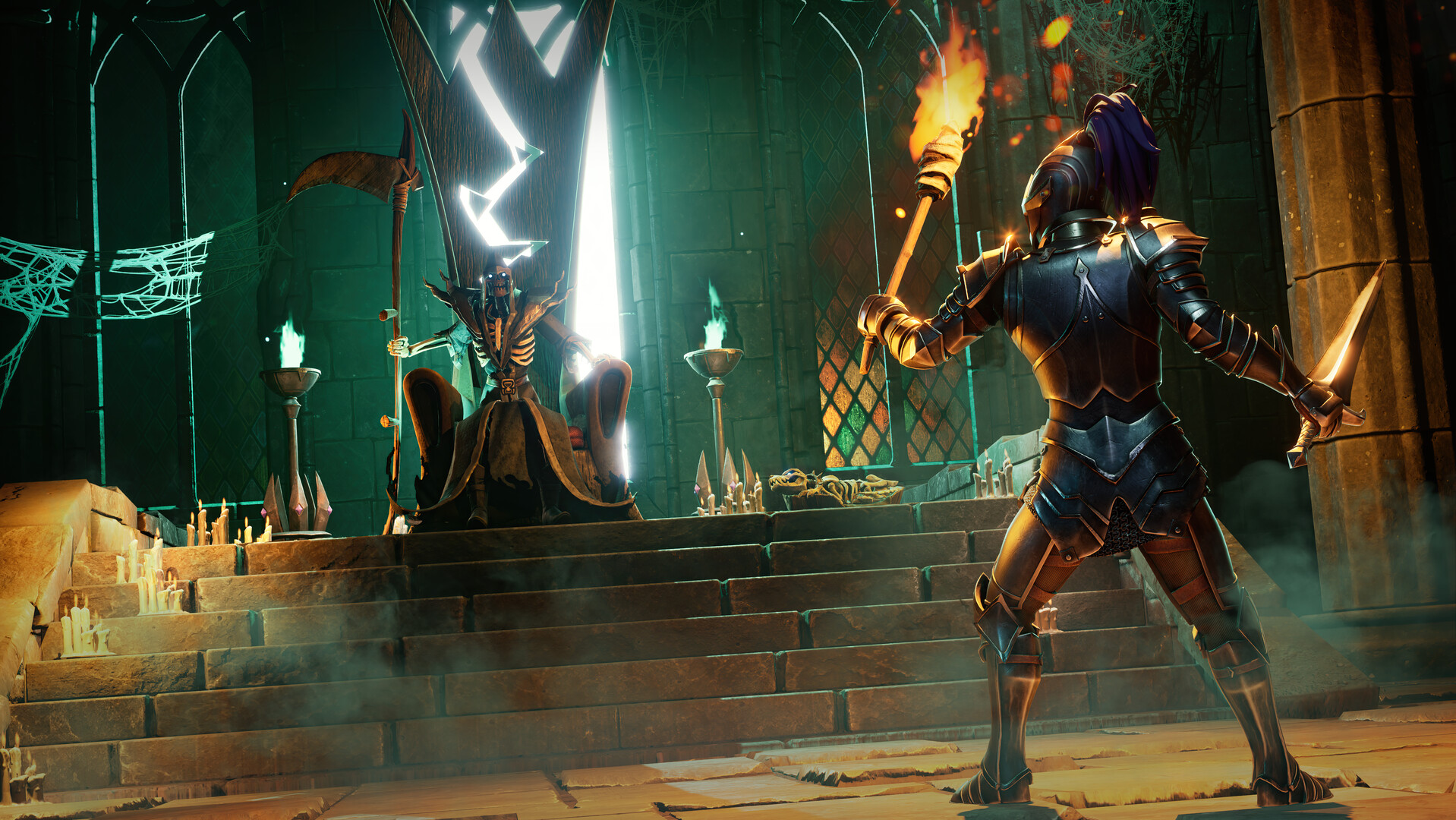
Why Survival Games Usually Get Danger Wrong
To understand what Dragonwilds is doing well, it helps to be honest about what the genre usually does poorly. Survival games, almost by definition, are built around scarcity and threat. Hunger drops, temperature drops, a predator appears, and the player has to respond within a tight window of viable choices. This creates tension, certainly, but it is a very particular, very repeatable kind of tension, one that tends to flatten with exposure. The first night in any survival game is terrifying because the player does not yet know the rules. The hundredth night is a checklist, because by then the rules have been fully learned and the danger has been reduced to a solved equation. Build a fire before dark. Keep the door barred. Carry a weapon strong enough for the local fauna. Once the equation is solved, the wilderness stops being wild in any meaningful sense. It becomes an obstacle course with predictable timing, and the game's ability to generate genuine unease quietly collapses even while its difficulty numbers stay exactly where they were on day one.
Dragonwilds inherits this same basic problem, because it cannot escape the fundamental mechanics of the genre it belongs to. There is hunger, there is exposure, there is combat, there is the nightly ritual of making sure your shelter can withstand whatever the dark decides to throw at it. What keeps this familiar structure from collapsing into the usual flattening is the presence of dragons as a layer of danger that refuses to be solved the way smaller threats can be. A wolf's behavior can be learned in an afternoon and then never thought about again. A dragon's behavior takes considerably longer to parse, partly because the stakes of getting it wrong are so much higher that players approach the learning process cautiously, and partly because the game does genuinely reward that caution with information rather than punishing every experiment with instant death. A dragon that is territorial about a specific ridge behaves differently from one that is simply migrating through on its way to somewhere else, and the game trusts the player to notice this difference through observation rather than spelling it out in a tooltip. That trust is unusual for the genre, and it is the foundation everything else is built on.
This is worth dwelling on because it reframes what "difficulty" even means in this context. A game that makes its biggest threat unpredictable in the sense of being unfair, where death can arrive with no warning and no recognizable cause, is not actually building tension. It is building frustration, and frustration teaches players to avoid engagement rather than deepen it. A game that makes its biggest threat unpredictable in the sense of being genuinely complex, where the danger follows real internal logic that simply takes time and attention to uncover, is doing something much harder and much more valuable. It is teaching the player a language. Dragonwilds spends its early hours doing exactly this, letting the dragons remain largely peripheral and observable from a distance, which gives the player room to start forming hypotheses about behavior before those hypotheses are ever tested under pressure. By the time a dragon becomes an immediate threat rather than a distant curiosity, the player already has a working theory of how it thinks, even if that theory is incomplete. That incompleteness, rather than being a flaw, is precisely what keeps the tension alive far longer than a typical survival game's threats manage to.
The Shelter as a Statement About the World
It would be easy to treat base-building in Dragonwilds as a purely functional system, a way to store items and provide a safe respawn point, the same role it plays in nearly every other game in the genre. But the placement and design of a shelter here carries more meaning than that framing suggests, because where and how you choose to build is itself a running commentary on how well you have understood the land around you. A base built without any awareness of dragon flight paths, migration routes, or territorial boundaries is not just inconvenient. It is a visible record of a player who has not yet learned to read the world, and the game has a way of eventually making that lack of understanding costly, whether through a structure damaged by a passing dragon's indifferent flight or through the sheer inefficiency of constantly rerouting around danger that better planning could have avoided entirely.
A base built with that awareness, by contrast, becomes something closer to an argument the player is making about the wilderness. Positioning a shelter in a natural blind spot along a dragon's known route, or orienting walls and defenses around a predictable seasonal pattern rather than a generic worst-case scenario, is the player demonstrating, through action rather than dialogue, that they have started to internalize the rules of the space they inhabit. This is a much more satisfying form of progression than the usual survival-game version, where progress mostly means bigger numbers and stronger materials. Progress in Dragonwilds is at least partly epistemic. You are not just getting stronger. You are getting smarter about a specific, particular world, and the base stands as physical proof of that accumulated knowledge every time you look at it.
This same idea extends into how crafting is framed. On the surface, crafting in Dragonwilds looks like standard genre fare: gather materials, unlock recipes, improve gear, repeat. What distinguishes it is the degree to which the materials themselves are tied to an understanding of where and how the wild operates, rather than being generic drops scattered indiscriminately across the map. A material sourced from a specific biome under specific conditions is not simply a harder-to-find version of a common resource. It is a small reward for having correctly read something about the environment that produced it, whether that is a seasonal bloom, a geological feature tied to dragon activity, or the aftermath of a territorial dispute between creatures the player witnessed rather than triggered. Gathering that material is not purely mechanical. It is confirmation that a hypothesis about the world was correct, and that confirmation carries a different emotional weight than simply finding an item because a wiki said it spawns there.
Taming and the Slow Negotiation of Trust
If base-building is about learning to read the land, taming is about learning to read a mind, and Dragonwilds treats this as a meaningfully different and more delicate process than the combat-and-craft loop that dominates most of the early game. A creature that can eventually be tamed, up to and including certain dragons, is never simply presented as a stat upgrade waiting to be unlocked through the correct sequence of button presses. The process is framed as something closer to negotiation, one where the player's patience, timing, and willingness to approach on the creature's terms rather than their own matters as much as any item in their inventory. This design choice does real work in reinforcing the game's larger thesis, because it takes the same core idea, that mastery here is really about comprehension rather than force, and applies it to the game's most emotionally charged relationships.
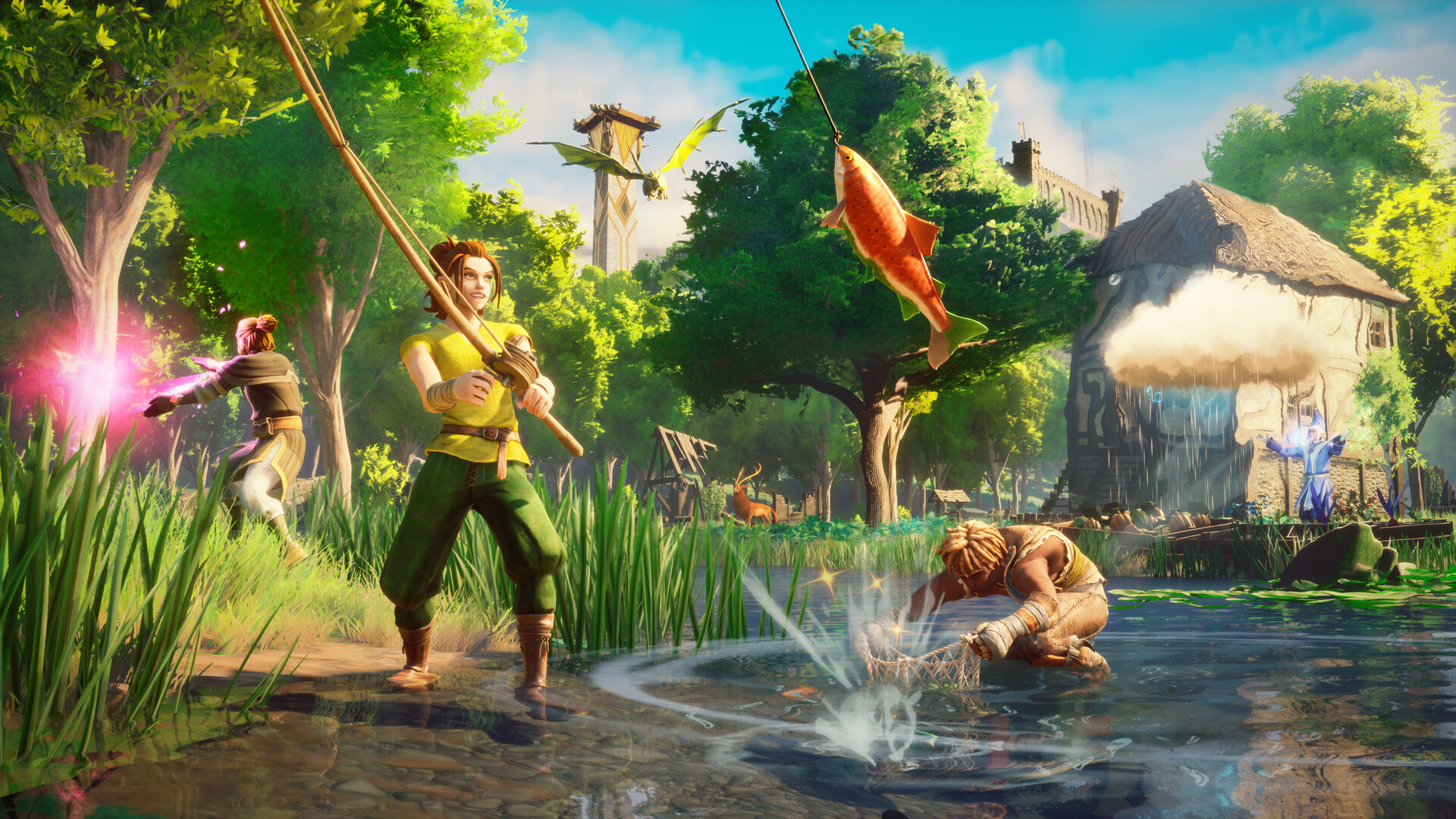
There is a specific kind of satisfaction that comes from successfully taming a creature that could easily have killed you an hour earlier, and that satisfaction is qualitatively different from the satisfaction of simply defeating that same creature in combat. Defeating something proves you were strong enough. Taming something proves you understood it well enough that violence was no longer the only available option. Dragonwilds leans into this distinction by making the tamed relationship feel ongoing rather than transactional. A creature that has accepted you does not simply become a permanent, unconditional ally the way a captured pet in a more arcade-style game often does. It continues to have needs, moods, and behaviors that the player has to keep paying attention to, which means the negotiation implied by taming never fully closes. You do not solve the relationship once and then stop thinking about it. You maintain an understanding, the same way the game asks you to maintain an understanding of the wider wilderness, and the parallel between these two forms of ongoing attentiveness, one toward the land and one toward a specific companion, gives the whole survival loop a coherence that is easy to underestimate on a first playthrough.
This also changes how combat against untamed dragons is framed later in the game, because by the time a player has gone through the taming process with a smaller or younger creature, they carry an intuitive sense of what that negotiation felt like into every subsequent encounter with a dragon they have not yet earned trust with. A fight against a hostile dragon starts to read less like a boss encounter and more like a conversation that has gone badly, one where the player recognizes, at least on some level, that a different approach, more patience, better timing, a different point of entry, might have avoided violence altogether. Not every encounter needs to be resolved that way, and the game does not punish players who prefer a more direct, combat-forward approach to its creatures. But the option to read every hostile encounter as a failed negotiation rather than simply an obstacle gives the combat systems a texture that pure damage-and-cooldown design rarely achieves on its own.
Dragons as Weather, Not Monsters
All of this builds toward the game's central and most distinctive idea, which is the reframing of dragons themselves away from the traditional monster-in-a-cave archetype and toward something closer to a natural, systemic force that happens to be alive. A traditional fantasy dragon exists to be fought. It guards something, it threatens something, its narrative purpose is resolved through confrontation, and once that confrontation concludes, the dragon's role in the story is essentially finished. Dragonwilds resists this framing at almost every turn, choosing instead to treat its dragons the way a survival game usually treats a storm system or a seasonal change: as an ongoing, cyclical presence that shapes the rhythm of play regardless of whether direct conflict ever occurs.
This has real mechanical consequences. A dragon's migration pattern affects where certain resources can safely be gathered on a given day. A dragon's territorial behavior during a particular season can make an entire region temporarily more dangerous or, just as often, temporarily richer in the kind of materials that only appear in the aftermath of intense draconic activity. Learning to plan around these patterns, the same way a farmer learns to plan around rainfall or frost, becomes a core part of long-term play, and it is here that the game's central metaphor earns its keep most clearly. You do not defeat weather. You learn to live inside it, to time your activities around it, to occasionally take shelter from it and occasionally take advantage of what it leaves behind. Dragonwilds asks the player to develop exactly this relationship with its dragons, and the request is not merely thematic dressing. It is the actual mechanical backbone of how the mid-to-late game is structured.
This reframing also changes what a dragon encounter feels like emotionally, in a way that is genuinely rare for the genre. Fear of a dragon in the game's early hours is fear of the unknown, the same instinctive panic that opened this piece. Fear of a dragon in the game's later hours, once the player has spent enough time observing patterns and testing hypotheses, becomes something closer to respect. You are not afraid of what the dragon might do because you cannot predict it. You are cautious because you can predict it, and you understand exactly how costly it would be to test that prediction carelessly. That shift, from fear of the unknown to respect for the known, is a much harder emotional arc for a game to earn than simple escalating threat, and it is the clearest sign that Dragonwilds has actually thought through the implications of putting dragons at the center of a survival structure rather than simply borrowing the creature for its brand recognition within the wider RuneScape universe.
Where the Metaphor Strains
None of this holds together perfectly across the entire runtime, and a fair account of the game has to acknowledge where the weather-not-monster framing starts to fray under the pressure of more conventional design demands. The clearest tension point comes whenever the game leans into set-piece dragon encounters, moments clearly designed to function as dramatic highlights rather than emergent systemic events. These encounters are not badly made in isolation, and some of them are genuinely thrilling in the traditional sense, but they sit awkwardly next to the more patient, observational relationship the rest of the game has spent so much time cultivating. A scripted confrontation with a named dragon, complete with distinct phases and a clear victory condition, is still fundamentally the old monster-in-a-cave structure wearing the visual language of the game's more ambitious systemic ideas. When these moments arrive, the careful sense that danger here is legible and pattern-based rather than scripted and theatrical takes a noticeable hit, even if the individual encounter is fun on its own terms.
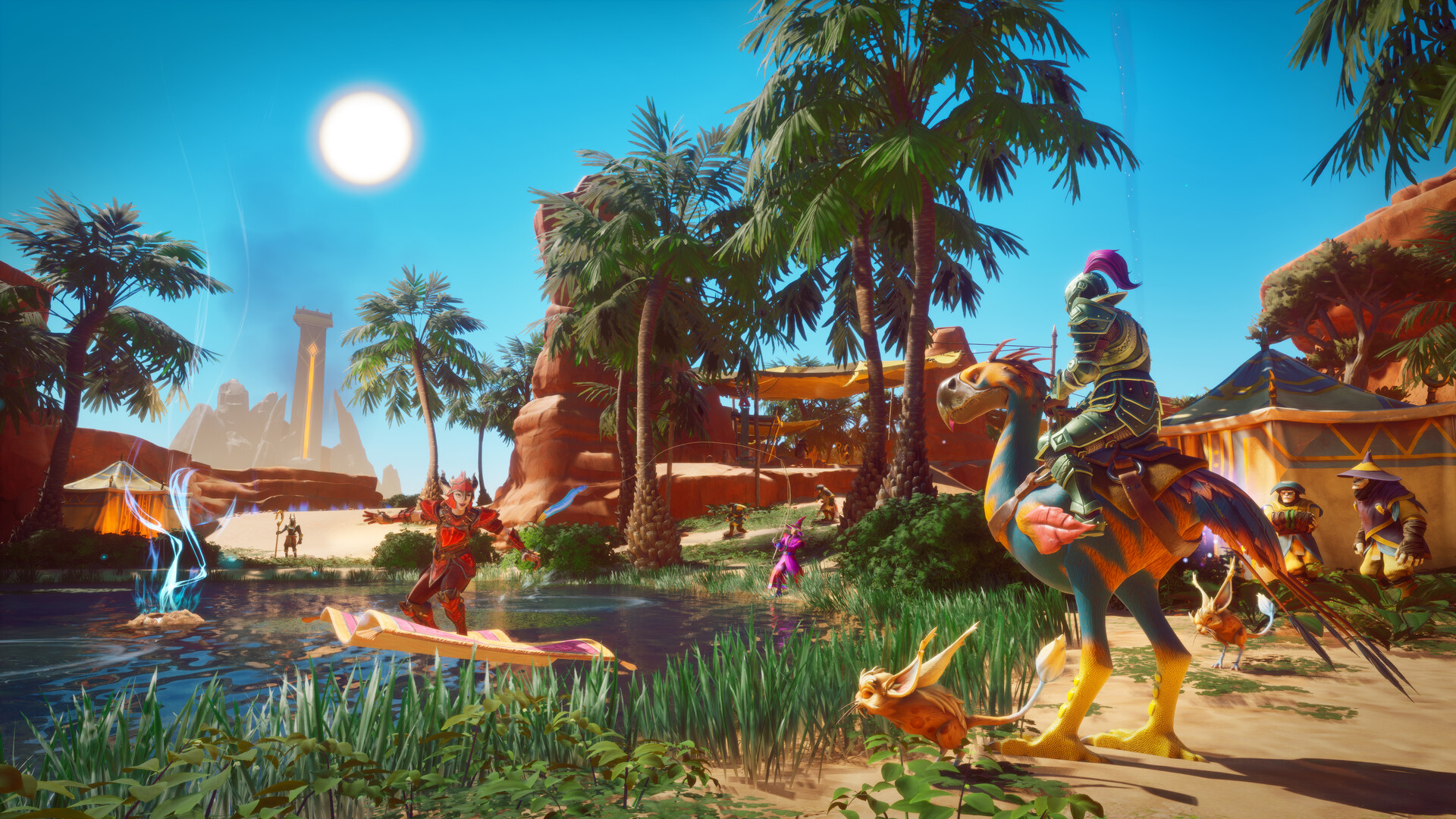
There is a similar strain around how the game handles progression pacing once a player has built up enough resources and knowledge to feel genuinely secure in a given region. Because so much of the early and middle game's tension comes from the slow process of learning a specific area's rhythms, that tension naturally softens once the learning is complete, and Dragonwilds does not always have a strong enough answer for what should replace it. A storm system in real life keeps producing genuine uncertainty indefinitely, because weather is chaotic in ways no amount of local knowledge can fully eliminate. A dragon's behavior in a video game, however well designed, is ultimately built from a finite set of rules, and a sufficiently attentive player will eventually reach the point where those rules stop producing surprises. The game's later hours occasionally reveal this ceiling more plainly than its stronger opening stretches, and the sense of ongoing negotiation with a living, unpredictable world can start to feel more like maintenance of a solved system than genuine continued discovery.
The taming systems carry their own version of this same limitation. The negotiation metaphor works beautifully for the first several creatures a player successfully tames, when the process still carries real uncertainty about whether a given approach will succeed. Once the underlying pattern of what any given creature responds to has been identified, though, subsequent taming encounters with similar creature types can start to feel like executing a known procedure rather than genuinely reading an individual, because the game's creature behaviors, while varied, are not infinite, and repetition eventually reveals the seams in even a well-constructed system. This is not a fatal flaw so much as an honest limit on what any game built from finite rule sets can achieve when trying to simulate something as open-ended as genuine trust-building, but it is worth naming clearly rather than glossing over in service of a tidier narrative about the game's achievements.
What Dragonwilds Understands That Most Survival Games Don't
Even accounting for these strains, what makes Dragonwilds worth taking seriously is the clarity of its central idea and the consistency with which that idea is pursued across systems that could easily have been designed in isolation from one another. Base-building, crafting, taming, and combat are not simply four separate mechanical pillars bolted together because the genre expects them. Each one, at its best, is doing the same underlying work: converting an initially illegible wilderness into something the player has earned the right to understand. This is a genuinely different design philosophy from the survival genre's more common approach, where systems exist primarily to create and resolve scarcity, and where the wilderness functions mainly as a hostile backdrop for that scarcity rather than as something with its own coherent internal logic worth deciphering.
The choice to build this philosophy around dragons specifically, rather than around a more conventional apex predator, gives the whole approach a scale and gravity that smaller-scale survival threats could not provide. A wolf pack learned and mastered within an hour does not carry enough weight to sustain an entire game's thematic architecture. A dragon population whose patterns take dozens of hours to genuinely understand, and whose behavior remains consequential even after that understanding is achieved, can. Whether every part of the game lives up to the ambition that framing implies is a fair question, and the answer, based on where the set-piece encounters and late-game pacing occasionally slip back into more conventional monster-fight territory, is not an unqualified yes. But the ambition itself, the decision to treat its signature creatures as something closer to a natural force to be understood rather than a monster to be defeated, is a meaningfully different bet than most of its genre peers are willing to make, and for most of its runtime, in the long stretches where a player is quietly, patiently learning to read a dangerous and beautiful world one flight path at a time, that bet pays off.